Activity Tracker
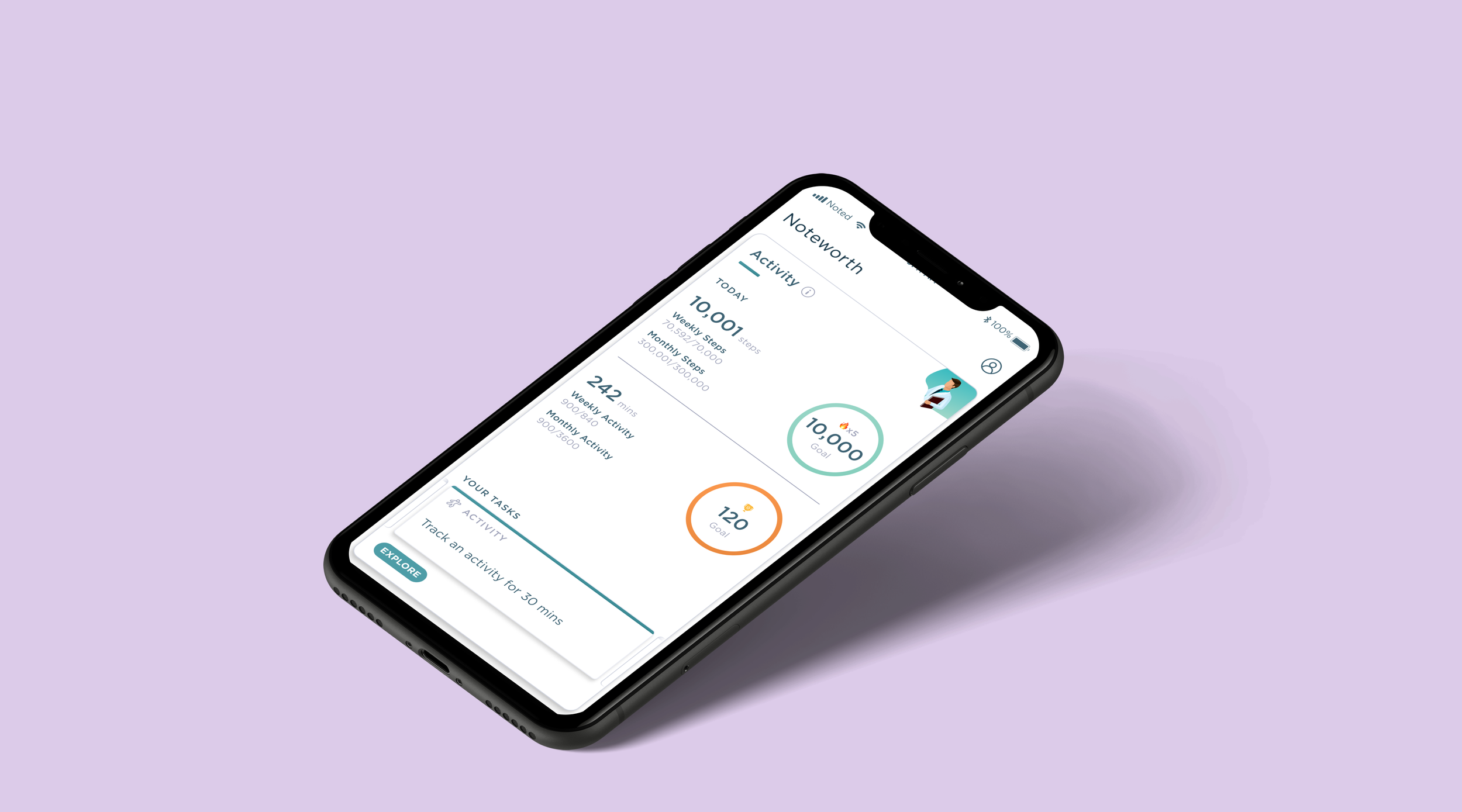
A patient goal tracking system built for simplicity — giving clinicians and patients a clear, shared view of health progress.
The Challenge
Design a robust system to track goals, fostering patient engagement and collaborative care. I designed a cutting-edge patient goal tracking system that goes beyond the limitations of typical activity apps.
Existing apps tracked pace, heart rate, steps, and time — but did not provide data usable by clinicians to track trends in patient activity over time for a complete health record. The goal was to enable patients to view their activity in a single glance while giving clinicians the longitudinal data they needed.
Simplicity is not just trendy — it's vital for user success in healthcare contexts where cognitive load is already high.
Understanding the Problem
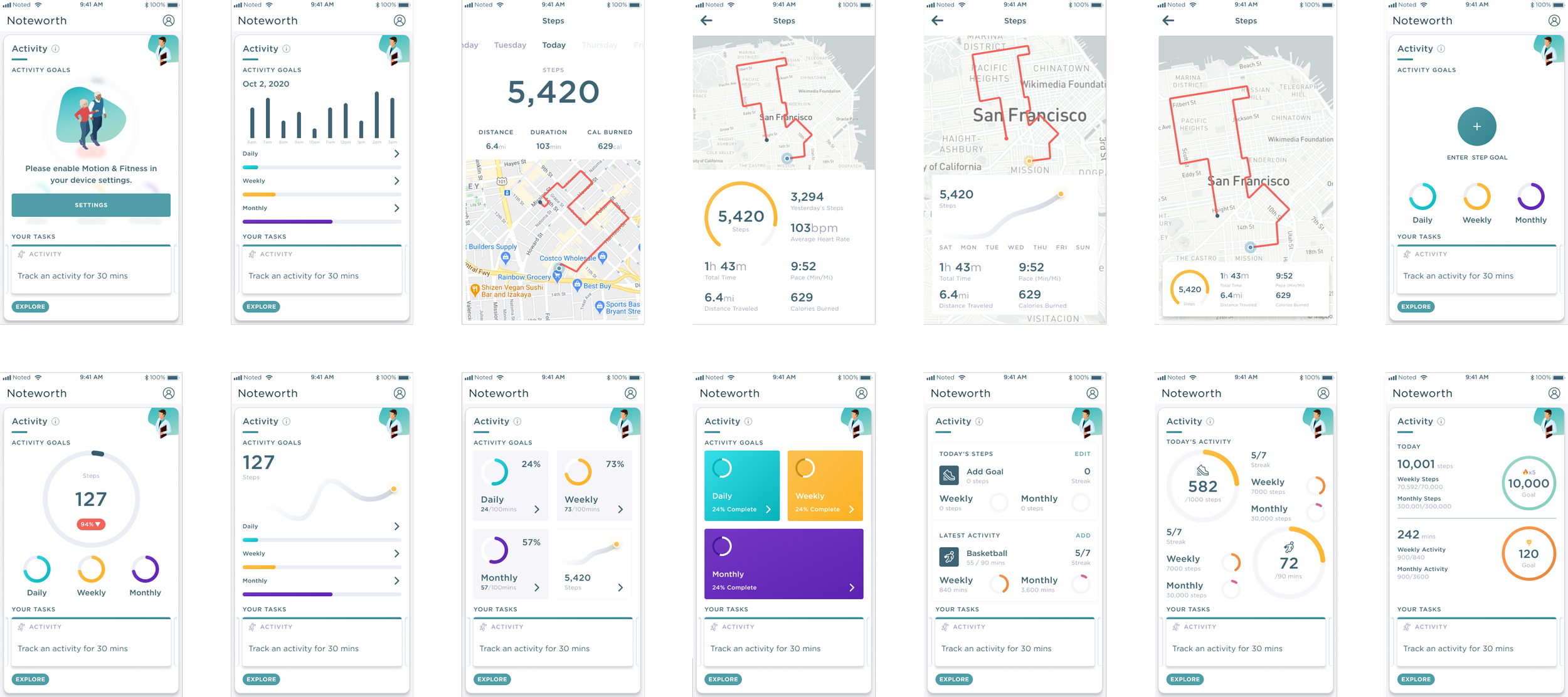
As part of the design discovery phase, the goal was to enable patients to view their step count and activity in a single glance, facilitating better management of their health goals. The user flow needed simplification to ensure easy comprehension of data.
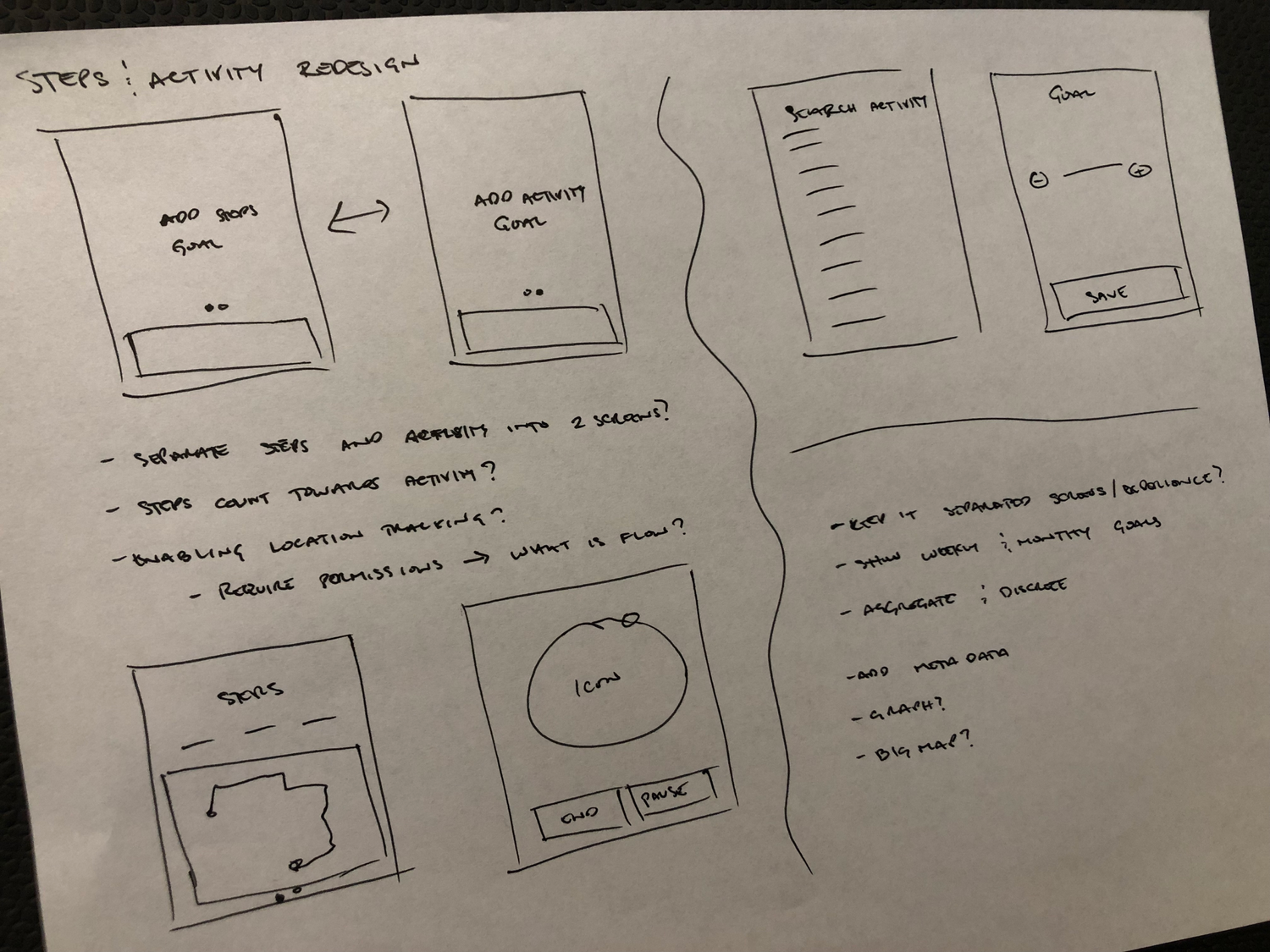
A competitive analysis assessed the core functionality and design gaps of existing tracking apps. While many apps tracked pace, heart rate, steps, and time, they did not provide data usable by clinicians for trend analysis over time.
Competitive analysis — identifying gaps in existing solutions
The Solution
I quickly realized a clear and simple solution was key to meeting patient needs. Instead of layers of UI complexity, I focused on enhancing existing designs and introducing purposeful new elements throughout the user journey.
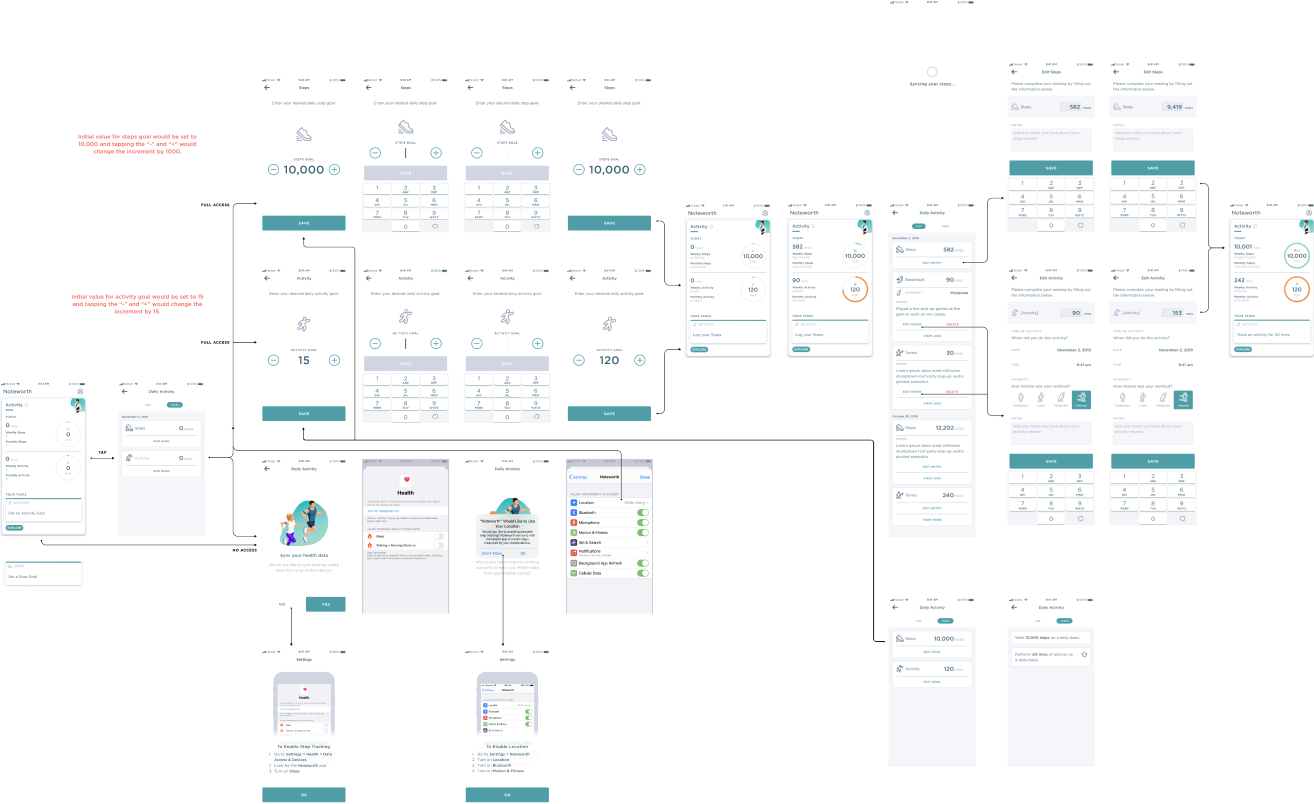
To ensure this clarity, I created a detailed flow diagram visualizing micro-interactions and streamlining communication with PMs and engineering. This diagram became a precise roadmap, guiding the handoff and development with ease.
Activity tracking dashboard — final design
Testing & Validation
This leap from passive viewing to active engagement led to invaluable insights. Executives saw the potential, stakeholders voiced specific needs, and healthcare providers offered crucial perspective on usability. This collective intelligence helped us refine the feature early, ensuring it meets the diverse needs of all involved.
Beyond valuable feedback, the clickable prototype streamlined the process. Stakeholders could comment and suggest changes instantly, eliminating communication delays and iterations.
User flow diagram — guiding development handoff
Iteration & Polish
The final design phase involved crafting comprehensive documentation for a unified user experience across mobile app, engineering, project management, and stakeholders. Using consistent design patterns, I created a clear and intuitive flow for patients submitting activity data and tracking progress over time.
The Outcome
Instead of patching up the old feature, we overhauled it — crafting a simple and intuitive solution that empowered users to manage their health goals effortlessly. This experience served as a powerful lesson: simplicity is not just trendy, it's vital for user success.
Throughout the design process, we championed clarity — resulting in a user-friendly experience that delivered superior outcomes for both patients and clinicians.